Many HR leaders ask the same question: “Which wellness incentives do employees actually use?”
Not the hypothetical incentives that sound good in a strategy meeting.
Not the trendy one-off perks that fade away after a few weeks.
Not the activities employees could do.
We’re talking about real incentives; the rewards, payout options, and earning structures employees actually chose, redeemed, and responded to this year.
To answer that question, our team at IncentFit analyzed millions of wellness actions and reward payouts across:
- 200,000+ employees
- 360+ organizations
- Millions of verified wellness activities
- Thousands of wellness program incentives and rewards
This is one of the largest datasets in the workplace wellness industry.
The findings reveal exactly which incentives motivated employees, which wellness rewards delivered the highest ROI, and what behaviors HR teams can reliably expect.
This guide breaks down the trends, the data, and the specific steps your HR team can take to design wellness incentives that employees actually use and love.
Table of Contents
- Why Wellness Incentives Matter More Than Ever
- The Top Wellness Incentives Employees Used This Year
- Most Popular Activities Logged by Employees
- Most Redeemed Rewards & Payout Trends
- The Rise of Mental Health & Habit-Based Incentives
- Real-World Examples: How Three Companies Used Incentives to Drive Participation
- What These Trends Mean for HR Leaders
- Wellness Incentive Design Checklist
- Conclusion
- FAQs

Why Wellness Incentives Matter More Than Ever
The workplace has shifted dramatically and faster than most HR teams ever anticipated.
Employees aren’t just navigating heavier workloads; they’re navigating heavier lives. They’re balancing their kids’ school schedules, aging parents, personal health challenges, financial stress, and the constant mental load of being “always reachable.”
As one HR director told us this year: “Our employees aren’t disengaged. They’re exhausted.”
That exhaustion is exactly why wellness incentives matter so much today.
When designed thoughtfully, wellness incentives help employees:
- Reduce friction so it’s easier to get started
- Feel the “nudge” to keep going when motivation dips
- Prioritize time for themselves without guilt
- Build micro-habits that compound over time
- Feel seen and supported by their employer
The truth is, most people don’t skip healthy habits because they don’t care. They skip them because life gets in the way.
Wellness program incentives (when built around real human behavior) turn health intentions into action.
They transform a vague goal like “I should walk more” into something structured like: “Take 15 minutes today and earn $3 toward your wellness reward.”
And that shift matters. A lot.
Across IncentFit clients, this type of structure leads to 60%+ engagement, which is nearly double the industry average.
The Top Wellness Incentives Employees Used This Year
Let’s be crystal clear: An activity is the thing someone does. And an incentive is the reward they receive for doing it.
Walking is an activity.
Meditating is an activity.
Gym visits are activities.
But the incentive is what motivates the behavior – payroll, HSA contributions, gift cards, PTO days, etc.
After analyzing millions of wellness rewards and wellness program incentives across hundreds of organizations, one fact stood out more than anything else:
Simple, financial, automatically delivered incentives outperform every other reward type.
Below are the incentive types employees actually used, listed from most redeemed to least:
- Payroll / Direct Deposit Incentives
- Digital Gift Cards
- HSA / HRA Contributions
- PTO Incentives
- Premium Reductions and Wellness Stipends
- Merchandise Mall Rewards
- Charitable Donations
1. Payroll / Direct Deposit Incentives
Payroll incentives are, by far, the strongest motivator across every age, industry, and role. They dominate every other reward type and the sheer scale of usage shows why. Across IncentFit programs:
- $15.4M paid via payroll in 2022
- $24.2M in 2023
- $27.4M in 2024
- 2025 is on pace to exceed $30M+
In total, IncentFit clients have distributed over $90 million in wellness rewards, and the vast majority of it goes directly through payroll or direct deposit. Employees gravitate toward this format because the reward simply appears. There’s no redemption process, no choice paralysis, and no risk of forgetting.
From a behavioral science standpoint, payroll incentives work because they eliminate friction. When the reward shows up automatically in an employee’s paycheck, the wellness activity feels more meaningful and more integrated into daily life. This is the structure that consistently drives the highest activity compliance – especially when paired with automatic verification from wearables and apps. In an environment where HR teams want predictable, sustained engagement, payroll incentives remain the most reliable lever.
2. Digital Gift Cards
Digital gift cards are the fastest-growing “feel-good” incentive. If payroll is the practical incentive, digital gift cards are the emotional one and employees increasingly love them. This year alone:
- 6,837 digital gift card redemptions, totaling $333,125
Digital gift cards have surged because they offer instant gratification and personal choice. Employees describe them as small celebrations, something they can immediately use to treat themselves. They’re also ideal for micro-incentives or small $5-$25 rewards that reinforce daily habits with a quick dopamine hit.
For HR teams with hourly or seasonal workers, gift cards solve another challenge: employees who prefer to keep wellness incentives separate from their paycheck. This format meets employees where they are emotionally and financially, which makes it a powerful engagement tool, especially for short-term wellness challenges, seasonal events, and habit-based programs.
3. HSA / FSA Contributions
HSA-based incentives continue to rise in popularity, especially among organizations with mature wellness strategies or high-deductible health plans. Employees value HSA contributions because they provide real financial protection: covering prescriptions, offsetting deductible pressure, or helping pay for visits and specialists.
IncentFit clients frequently pair these rewards with preventive care, biometric screenings, or more effort-based health activities and the completion rates are correspondingly high. A simple $50-$100 HSA reward for a preventive checkup often doubles participation because it feels substantial and directly tied to long-term wellbeing. For benefits-focused employers, HSA contributions are one of the most high-impact reward types available.
4. PTO Incentives
Time has become the most precious employee resource and PTO incentives tap directly into that emotional value. They create a sense of trust, recognition, and genuine care that financial incentives can’t always replicate.
Younger employees and working parents respond especially strongly to time-based rewards. One IncentFit client ran a walking challenge where the top five performers earned a half-day of PTO and participation jumped 30% compared to previous cash-only challenges. Even micro-PTO (“Leave one hour early on Friday after completing preventive care”) is powerful because it signals corporate values: rest, recovery, and balance.
While PTO isn’t the highest-volume reward type, it is one of the most culturally meaningful and the enthusiasm HR teams see speaks for itself.
5. Premium Reductions and Wellness Stipends
Premium offsets have become one of the strongest long-term wellness incentives for larger organizations or teams with high benefits literacy. They’re most often tied to preventive care, tobacco cessation programs, annual screenings, and health assessments and the data shows sustained performance across multiple years.
- Group 1 (1,500 employees): 72% → 62% → 58% participation
- Group 2 (4,000 employees): 61% → 67% → 74% → 65% participation
- Group 3 (250 employees): 72% → 62% → 58% participation
Premium offsets work because employees perceive them as significant, long-term financial benefits. They help with rising healthcare costs and offer real savings at a time when affordability matters more than ever. For employers with strong internal communications, premium reductions remain one of the most effective high-impact incentives available.
6. Merchandise Mall Rewards
Merchandise is not the most frequently redeemed incentive, but it plays an important role in culture-building and team-based wellness moments. Across this year’s data:
- 729 debit card orders totaling $69,550
Strong redemption across lifestyle categories like fashion, home goods, and sports/outdoors
Merch rewards shine in situations where employers want employees to feel a sense of community, celebration, or team spirit. Physical items make wellness achievements more visible – a water bottle earned from a steps challenge, a hoodie earned from preventive care compliance, or a piece of fitness equipment from a long-term program.
While merch isn’t the top driver of participation, it enriches the emotional and cultural dimensions of a wellness program, especially during seasonal events and company-wide competitions.
7. Charitable Donations
Charitable giving is the lowest-used incentive type from a volume standpoint, but it delivers meaningful impact – particularly for mission-driven organizations, nonprofit sectors, and younger employees who value purpose-driven work. Across client redemptions, the charitable category consistently appears as an option, and while small in total volume, it performs reliably in culture-conscious workplaces.
Data from recent years shows steady charitable redemptions:
- $2,418 in donations in 2022
- $2,467 in 2023
- Continued donations throughout 2024 and 2025
Employees appreciate the ability to turn their wellness efforts into community impact, whether through small recurring donations or challenge-related contributions. This format tends to resonate strongly with teams that prioritize corporate social responsibility or emphasize community service.
For HR leaders, charitable incentives offer a powerful way to align wellness with organizational values, especially when paired with volunteer challenges or purpose-driven wellbeing initiatives.
Most Popular Activities Logged by Employees (And Why Incentives Matter)
Though this article is about incentives, activities help us understand behavior patterns. Based on millions of tracked actions, the most frequently logged activities were:
- Walking
- Gym check-ins
- Cycling & cardio workouts
- Hydration tracking
- Mindfulness & meditation minutes
- Daily movement goals
- Preventive care visits
Walking remains #1 because it’s accessible to everyone, across all shift types, job roles, and health conditions.
And here’s the key insight: Walking doesn’t spike engagement on its own. Payroll incentives + walking does.
The same is true for:
- Meditation + gift cards
- Preventive care + HSA contributions
- Challenges + PTO rewards
Incentives turn ordinary habits into repeatable behaviors.
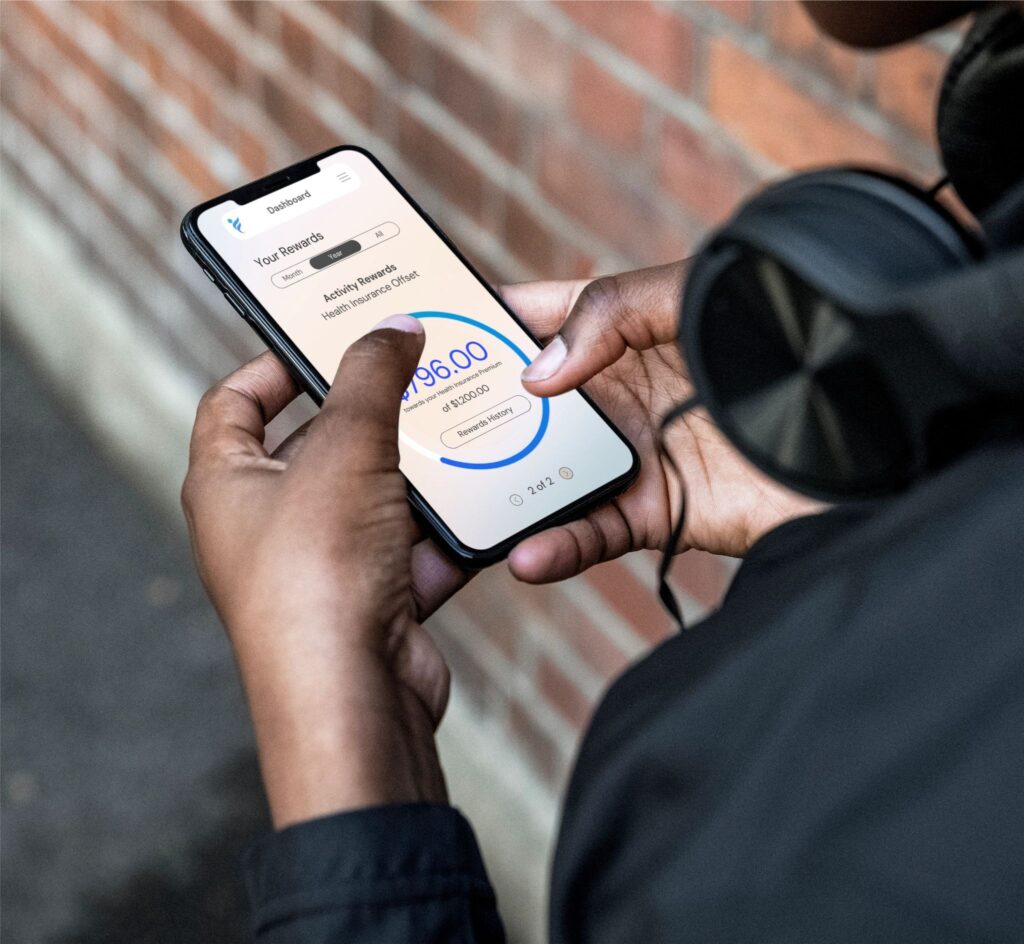
Most Redeemed Rewards & Payout Trends
Across all IncentFit clients this year, we saw three clear patterns that show how employees actually engage with wellness rewards. These insights reveal not just what incentives people like, but what they actually use, which is the part that creates ROI.
Let’s break down what the data tells us:
- Financial incentives outperform non-financial incentives every single time
- Employees prefer incentives they don’t have to “redeem”
- Smaller, more frequent incentives outperform large, infrequent incentives
Truth #1: Financial incentives outperform non-financial incentives every single time
Cash-equivalent rewards (like payroll, direct deposit, HSA contributions, and digital gift cards) consistently rise to the top across all industries, regardless of organization size or employee demographics. Why? Because financial incentives:
1. Feel universally meaningful
A $10 payroll reward means something to every employee – whether they’re early career, caring for a family, or nearing retirement.
Non-financial perks like t-shirts or swag don’t have that effect.
2. Support real life stressors
In a year of high inflation, rising healthcare costs, and financial strain, employees are choosing incentives that help with everyday expenses.
We heard variations of the same employee quote again and again: “The extra money helps. That’s why I stay consistent.”
3. Create real accountability
Employees view financial incentives as: fair, transparent, predictable, and worth their time.
This makes them more likely to log activities accurately and participate consistently.
4. Work for all activity types
Employees earned financial incentives for:
- Gym visits
- Mindfulness
- Preventive care
- Hydration
- Strength training
- Walking challenges
- Step streaks
- Nutrition logging
When the incentive is meaningful, the activity becomes meaningful.
Truth #2: Employees prefer incentives they don’t have to “redeem”
This year’s data showed a surprisingly powerful pattern: The fewer steps between “I did the action” and “I received the reward,” the higher the engagement.
This is why payroll incentives and HSA contributions are the most redeemed. They require zero employee effort after completing the activity.
Automatic payouts remove friction
Employees do not want to:
- Enter codes
- Open separate portals
- Choose from 200 gift card options
- Wait weeks for approval
- Worry about tax implications
- Wonder if HR saw their submission
Employees overwhelmingly prefer incentives that require no extra steps; rewards that simply appear without codes, portals, or decisions to make. From a behavioral science perspective, this is the core principle: reduce friction → increase action. Any redeemable reward, even one extra click, introduces resistance and lowers engagement. Digital gift cards still perform well because delivery is instant, but when employees have a choice, they consistently favor direct financial rewards like payroll or HSA contributions. Automatic payouts not only boost participation but also build trust, because the process feels fair, seamless, and predictable.
Employees feel the system is fairer when:
- Verification is automated
- Reward delivery is automated
- Timing is predictable
- There is no subjective approval process
This consistency keeps people coming back.
Truth #3: Smaller, more frequent incentives outperform large, infrequent incentives
This was one of the strongest findings this year. Employees don’t need large rewards to stay motivated, they need frequent recognition. For example, a $3 reward for hitting a daily movement goal feels more motivating than a $300 end-of-year incentive, because:
1. Humans respond to “immediate wins”
Behavioral economists call this: Present bias = we value rewards we can receive now more than rewards we receive later.
Daily, weekly, or per-activity incentives:
- Keep motivation high
- Prevent drop-off
- Reinforce consistency
- Build habits
2. Micro-incentives make healthy habits easier
When employees know they can earn a reward today (not months from now) they are far more likely to:
- Take a quick walk
- Meditate
- Hit 8,000 steps
- Log their hydration
- Complete a preventive care task
3. Frequent incentives create a sense of progress
People don’t just want rewards, they want momentum. And every automatic payout is a tiny feedback loop: Action → Achievement → Reward → Repeat.
Across all IncentFit clients: Micro-incentive programs saw the highest engagement of the year.
4. Big rewards create pressure; small rewards create encouragement
Large incentives often feel:
- Intimidating (“I’ll never hit that goal”)
- Unclear (“How close am I?”)
- Distant (“I won’t earn anything for months”)
Small incentives feel:
- Doable
- Personal
- Immediate
This shift can double engagement for organizations transitioning from a once-per-year structure to weekly or per-action rewards.
The Rise of Mental Health & Habit-Based Incentives
If 2020-2022 represented the rise of physical wellness incentives, then 2024-2025 has unquestionably been the rise of mental wellness and habit-based incentives. Employees increasingly earned incentives for activities such as:
- Meditation
- Journaling
- Deep breathing practices
- Mindfulness sessions
- Healthy meal logging
- Sleep tracking
- Digital micro-practices (e.g., “Take 2 minutes to reset” prompts)
These incentives are small but powerful and the participation data doesn’t lie. Across IncentFit clients, organizations that incorporated mental wellness incentives saw:
- Higher program-wide engagement
- Lower burnout levels, especially among hybrid workers
- Fewer sick days and unplanned absences
- Higher preventive care compliance (mental health awareness drives more proactive healthcare behavior overall)
- More positive employee feedback, especially around “feeling supported”
This shift reflects a larger truth: Wellness is no longer “steps only.” It’s whole-person wellness.
Employees want support that meets them where they really are – managing stress, improving sleep, rebuilding routines, and finding moments of calm in a busy life. Habit-based incentives reward the behaviors that are actually feasible on the toughest days, which is why they’re becoming such a strong predictor of long-term retention in wellness programs.
Real-World Examples of Incentives in Action
Data is powerful, but seeing how incentives play out inside real organizations brings the trends to life. Here are a few quick examples that show how different companies used wellness incentives and the measurable impact those choices had on participation, motivation, and overall employee wellbeing:
- Healthcare System
- Retail
- Financial Services
- Manufacturing
A Major Healthcare System (12,000 employees)
After tying HSA incentives directly to preventive care compliance, annual physical completion increased 22% year-over-year. Employees cited “financial relief” and “clear direction” as top motivators.
A Nationwide Retail Organization
By introducing micro-incentives delivered via digital gift cards, the company saw a 33% increase in hydration, mindfulness, and healthy habit challenges. The instant reward format was especially motivating for hourly workers.
A Financial Services Company
Switching from gift cards to payroll-based incentives increased monthly participation by 37%. Employees appreciated the simplicity (“It just shows up in my paycheck”) and consistently completed more small daily activities.
A Manufacturing Company
Adding PTO-based rewards for top challenge performers led to their highest-ever challenge completion rate: 61%. Even a half-day of PTO created a competitive, positive buzz that boosted team-wide engagement.
These organizations used different incentive types, but all experienced the same outcome: Meaningful incentives drive meaningful engagement.
What These Trends Mean for HR Leaders
The data makes one thing clear: the wellness incentives that work are the ones that align with real human behavior, not wishful thinking or outdated assumptions. As you plan your next wellness cycle, here are the five most important takeaways that will help you design incentives employees actually use:
- Choose incentives that are financially meaningful
- Automate everything you can
- Reward consistency, not intensity
- Support whole-person wellness
- Offer a mix of big and small wins
1. Choose incentives that are financially meaningful.
Payroll, direct deposit, HSA contributions, and premium offsets consistently outperform physical merch or swag. They meet real needs and employees notice.
2. Automate everything you can.
Automatic verification + automatic payout = automatic engagement. This removes friction and dramatically reduces administrative lift.
3. Reward consistency, not intensity.
Employees perform better with incentives tied to small, frequent actions rather than large, “all-or-nothing” achievements.
4. Support whole-person wellness.
Balance physical wellness incentives (steps, fitness minutes) with mental and emotional support (meditation, sleep, stress reduction).
5. Offer a mix of big and small wins.
The strongest programs combine:
- Micro-rewards for daily habits
- Milestone incentives for preventive care or long-term goals
This formula improves long-term participation and reduces drop-off.
Incentive Design Checklist for HR Leaders
Before launching or refreshing your wellness program, ask:
- Do your incentives feel financially meaningful?
- Do they support small, repeatable actions rather than big, sporadic ones?
- Do they pay out automatically with no redemption friction?
- Are they inclusive for all roles, schedules, and physical ability levels?
- Do they support mental wellness as much as physical wellness?
- Are they tied to activities employees actually perform based on participation data?
- Are you offering a balanced mix of payroll incentives, gift cards, and HSA contributions?
- Will employees instantly understand how to earn rewards and what each reward is worth?
If you can confidently check most of these boxes, you’re building a program employees will actually use.
Conclusion: Wellness Incentives
Employees do not need extravagant, complicated wellness incentives. What they truly want are incentives that are:
- Simple
- Financially meaningful
- Automatic
- Flexible
- Human
IncentFit’s data from millions of employee activities paints a clear picture: Payroll incentives, digital gift cards, and HSA contributions were the most-used, most-loved, and most effective incentives across all employee types.
When companies reward small, consistent actions with simple, motivating incentives, employees build healthy habits and organizations see real behavior change, higher participation, and measurable ROI.
Wellness programs succeed when employees feel seen, supported, and rewarded in ways that matter to them. Want help building a program your employees will actually use? Schedule a call with one of our Benefits Specialists.
FAQs
Q: What activities can employees earn rewards for?
A: Employees can earn rewards for walking, biking, running, yoga, meditation, gym check-ins, and even swimming. Beyond movement, employers can also include holistic wellness goals like mindfulness, nutrition, sleep tracking, or volunteering.
Fitness Rewards is fully configurable, meaning organizations can choose from hundreds of wellness activities or create their own categories. The program supports everything from daily movement to mental wellness, ensuring inclusivity for employees of all fitness levels and lifestyles.
Q: How does IncentFit verify activities?
A: Activities are automatically verified through 35+ wearable integrations, including Fitbit, Garmin, Apple Health, and Samsung Health.
IncentFit also supports QR-based gym check-ins, app connections, photo uploads, and admin verification for special events. Verification rules are tailored to each program’s goals, and data syncs in real time.
Q: Do incentives really boost participation?
A: Yes. Behavioral science shows that simple, timely rewards drive lasting engagement. IncentFit clients consistently see 60%+ participation – nearly double the industry average.
Timely, meaningful incentives reinforce small, repeatable actions, driving consistent engagement and healthier outcomes.
Q: Can Fitness Rewards integrate with HR or payroll systems?
A: Absolutely. IncentFit integrates with 100+ HRIS, payroll, and benefits platforms, automating reward delivery and reporting with no extra administrative work.
Q: What kinds of rewards can employees earn?
A: Organizations can offer payroll incentives, direct deposits, digital gift cards, HSA contributions, PTO, premium reductions, and branded merchandise. IncentFit automates reward distribution based on your program design.
Q: How long does setup take?
A: Most programs launch within 2-4 weeks, depending on customization levels and integrations. Many organizations launch in days using IncentFit’s pre-built templates and onboarding support.